Discover who can compromise Tier 0
Identify the accounts, groups, service identities, and systems with direct or indirect control over Tier 0. Uncover lower-tier and unclassified identities with privileges that create risk.
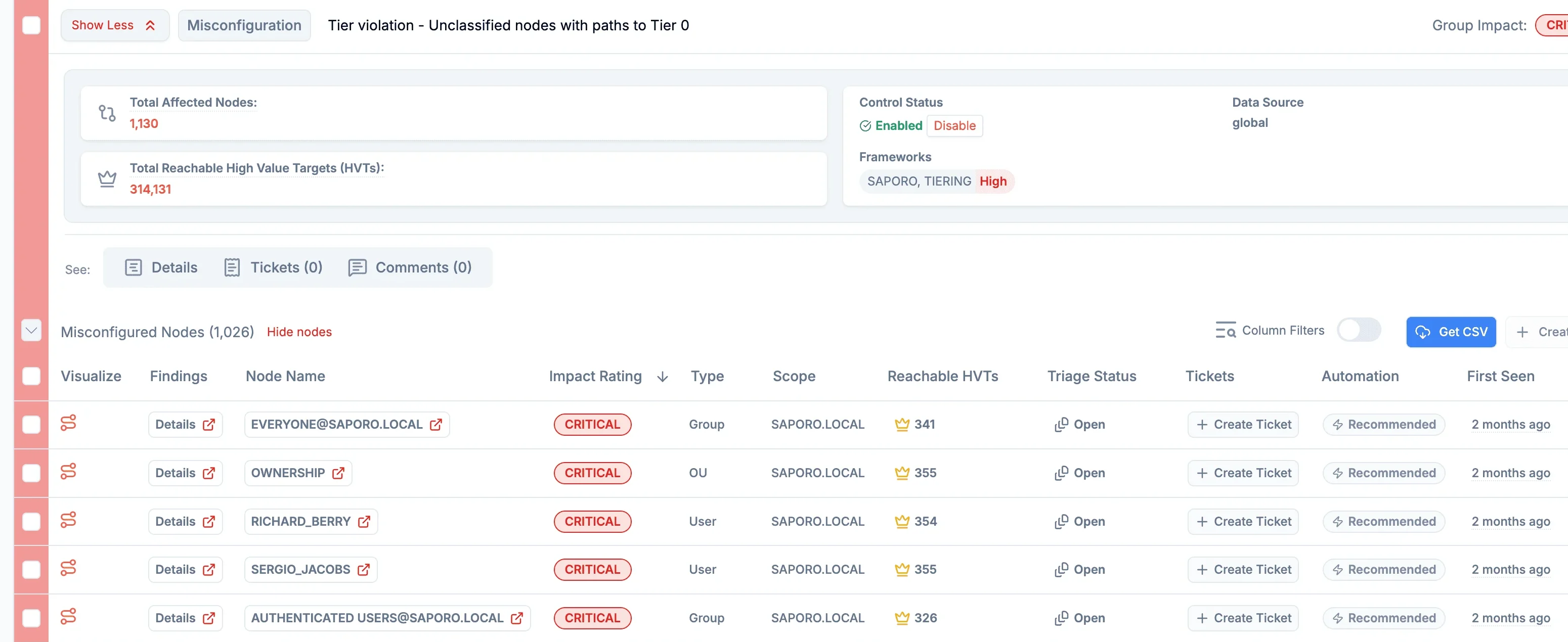

Tiering & Segmentation
Find the access that breaks tier boundaries and exposes critical assets. Prioritize targeted fixes, verify isolation and catch new violations as your environment changes.
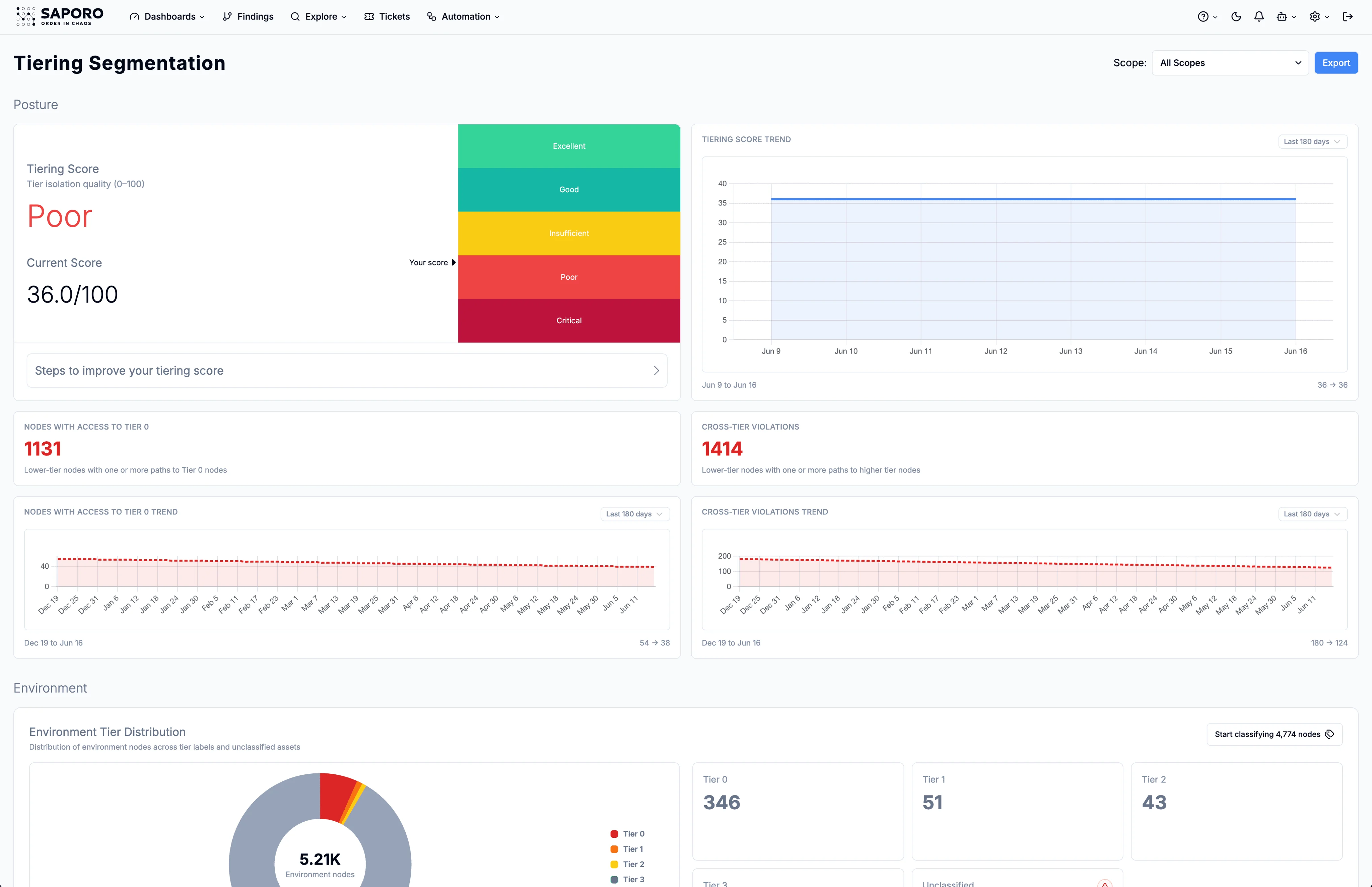
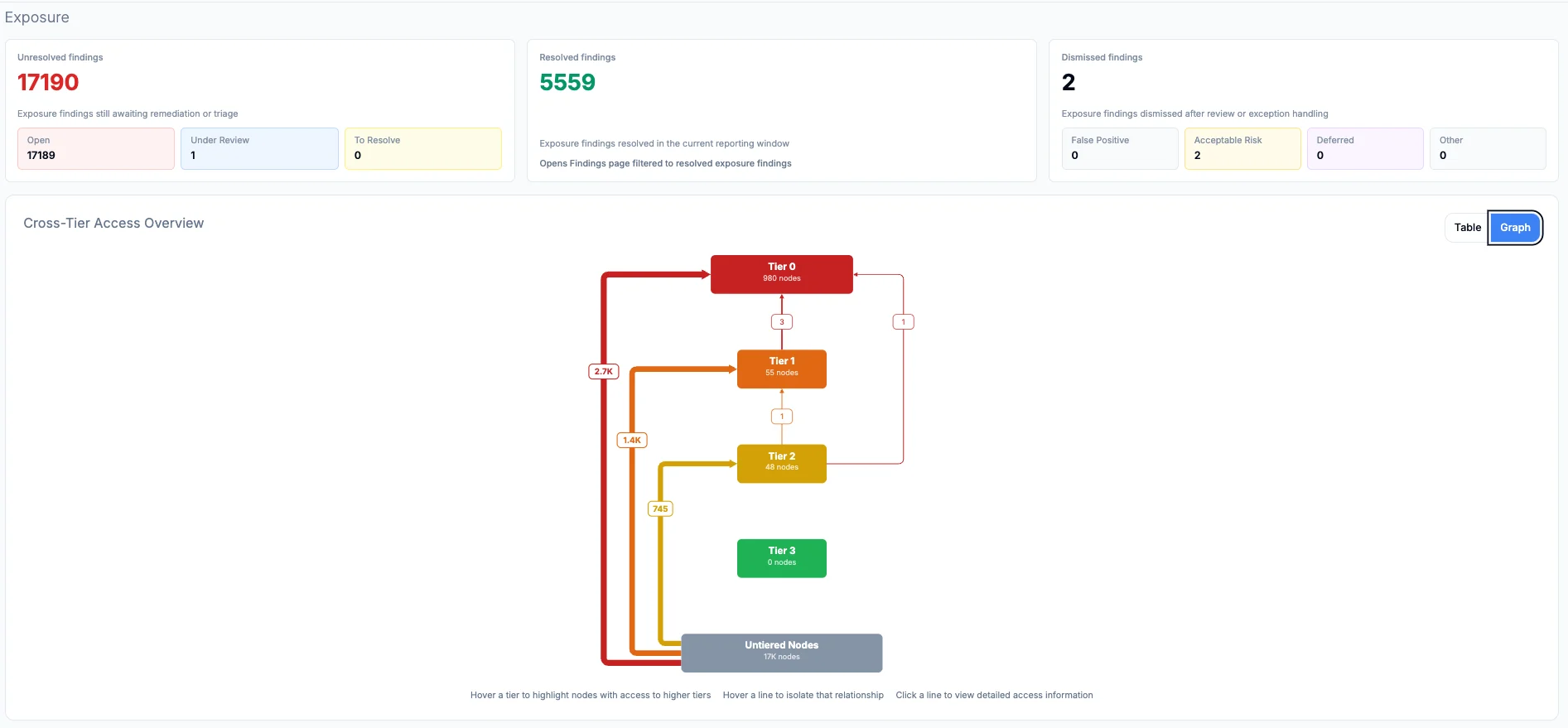
Identity tiering separates accounts and systems by what they can control. Tier 0 holds the keys to your environment, from domain controllers to privileged roles in Microsoft Entra ID.
Lower tiers must not control higher tiers, and privileged credentials must stay protected from exposure on less trusted systems.
Nested groups, delegated permissions and service accounts can create attack paths across those boundaries, allowing a compromised identity to reach more privileged systems.
Reveal access that crosses tier boundaries, prioritize the changes that strengthen isolation and coordinate remediation through governed workflows.
Identify the accounts, groups, service identities, and systems with direct or indirect control over Tier 0. Uncover lower-tier and unclassified identities with privileges that create risk.
Compare your intended tiers with actual access across all Tiers. Trace permissions, nested groups and delegated rights to pinpoint where isolation breaks down.
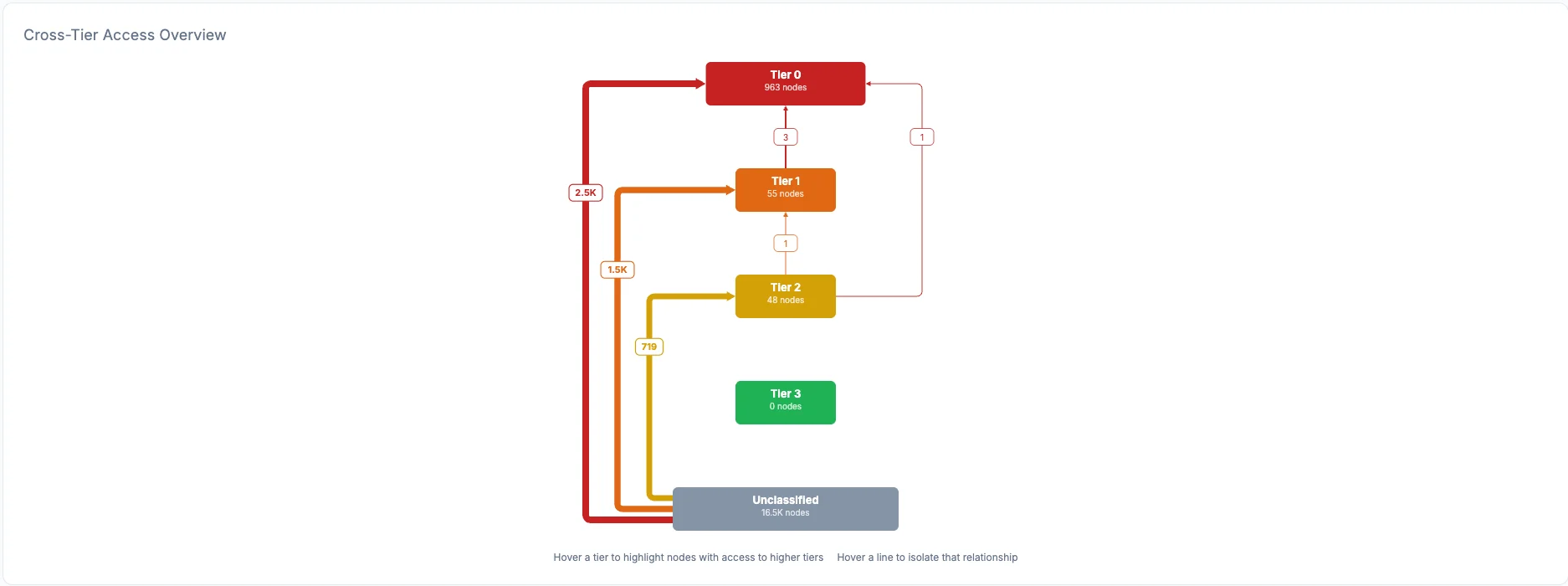
Identify chokepoints that expose Tier 0 and prioritize targeted permission changes. A single fix can eliminate millions of attack paths.
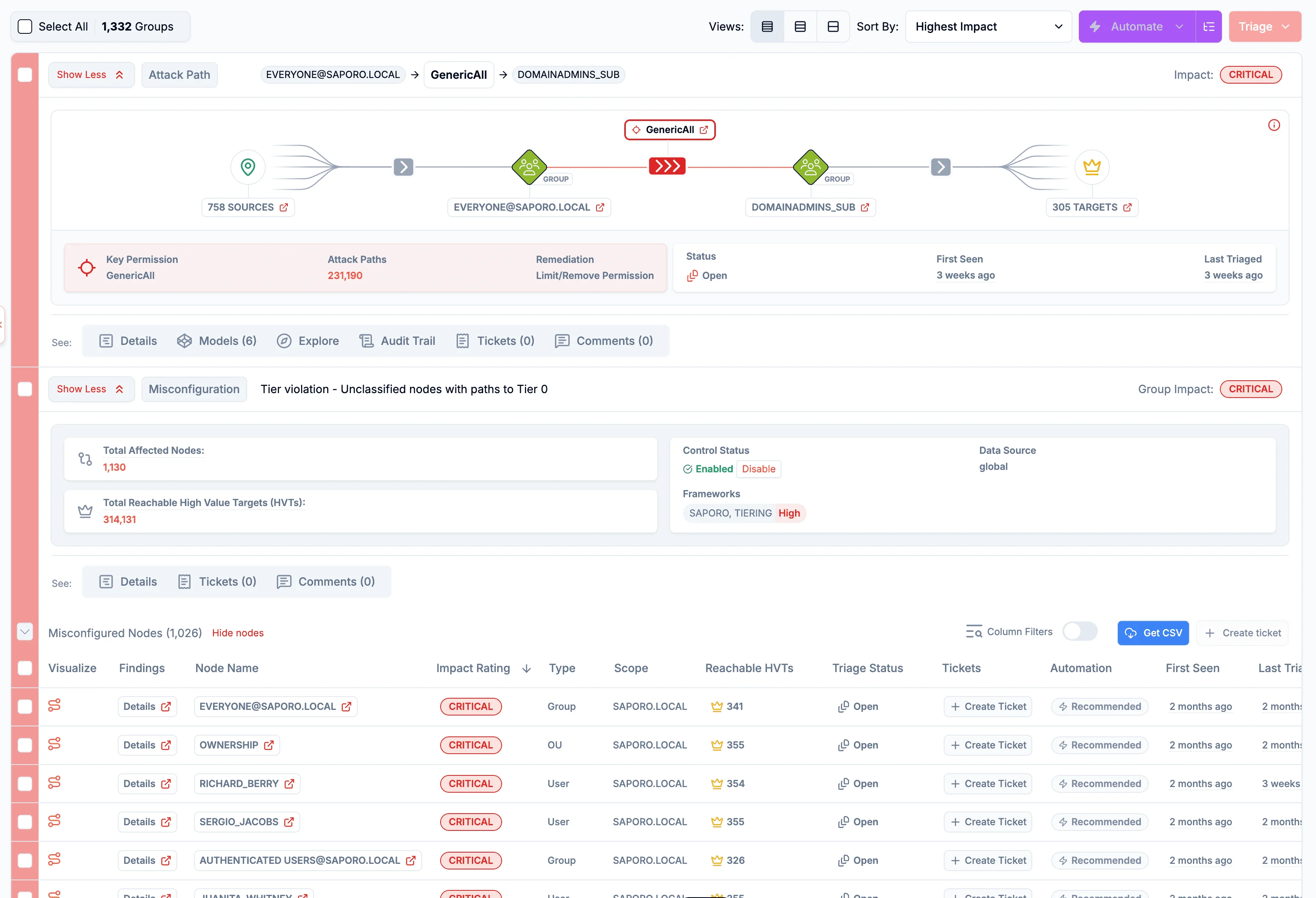
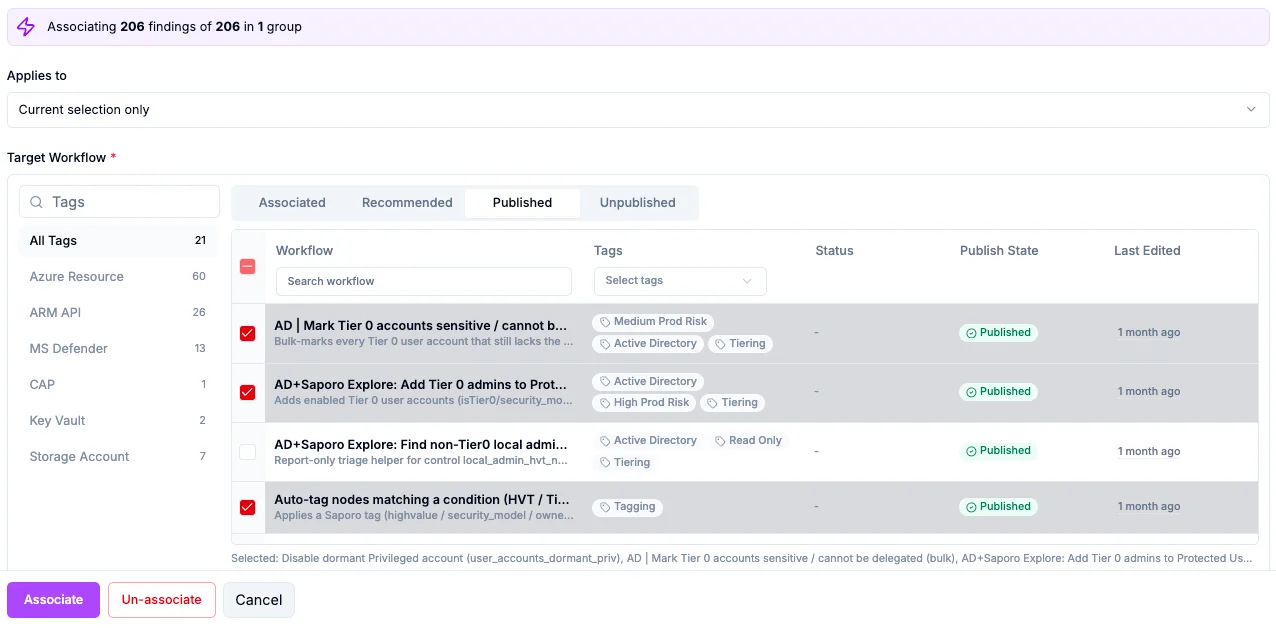
Use built-in Tier 0 classification, manual assignment, and tagging workflows to assign identities to tiers. Remediate findings with prebuilt or custom workflows, with approval for sensitive changes.
12–24 months → 3–6 months
Estimated tiering project duration with Saporo. Reduce manual privilege mapping, accelerate remediation, and verify isolation throughout delivery.
Find the hidden access that lets a compromised account threaten Tier 0. Prioritize changes that remove the most attack paths and verify the reduction in exposure.
Give architects a clear view of effective privilege and a prioritized remediation plan. Spend less time reconstructing access relationships and more time establishing isolation.
New permissions and configuration changes can reopen paths you already closed. Daily checks surface new violations so your team can address drift and sustain its progress.
Tiering & Segmentation Q&A
Identity tiering groups accounts and systems by administrative role and privilege. Tier 0 contains the identities and infrastructure that control your identity environment. Separating tiers limits how far a compromise can spread.
Identity segmentation restricts privileged access between tiers. It removes attack opportunities that could turn a compromised account or service identity into control of critical systems.
Saporo combines built-in Tier 0 classification with your tier assignments. Graph analysis then reveals lower-tier or unclassified identities with access or attack paths to Tier 0.
Saporo identifies direct, inherited, delegated and transitive access that breaks tier boundaries across all Tiers, including access from unclassified identities. It traces access and attack paths through nested groups, delegated permissions, service accounts and GPOs across Active Directory, Entra ID and every connected identity source.
Scheduled analysis reveals new tier violations and access or attack paths reopened by permission or configuration changes, helping your team address drift and sustain isolation.
Track your Tiering Score, cross-tier violations and exposure to Tier 0 in the Tiering dashboard, with historical trends, including 180-day views, to demonstrate progress.