
ACTIVE DIRECTORY EXPOSURE

Reduce identity exposure across Active Directory

Active Directory controls access across your on-premises environment, and years of nested groups, delegated rights, and stale permissions create hidden paths to Tier 0.

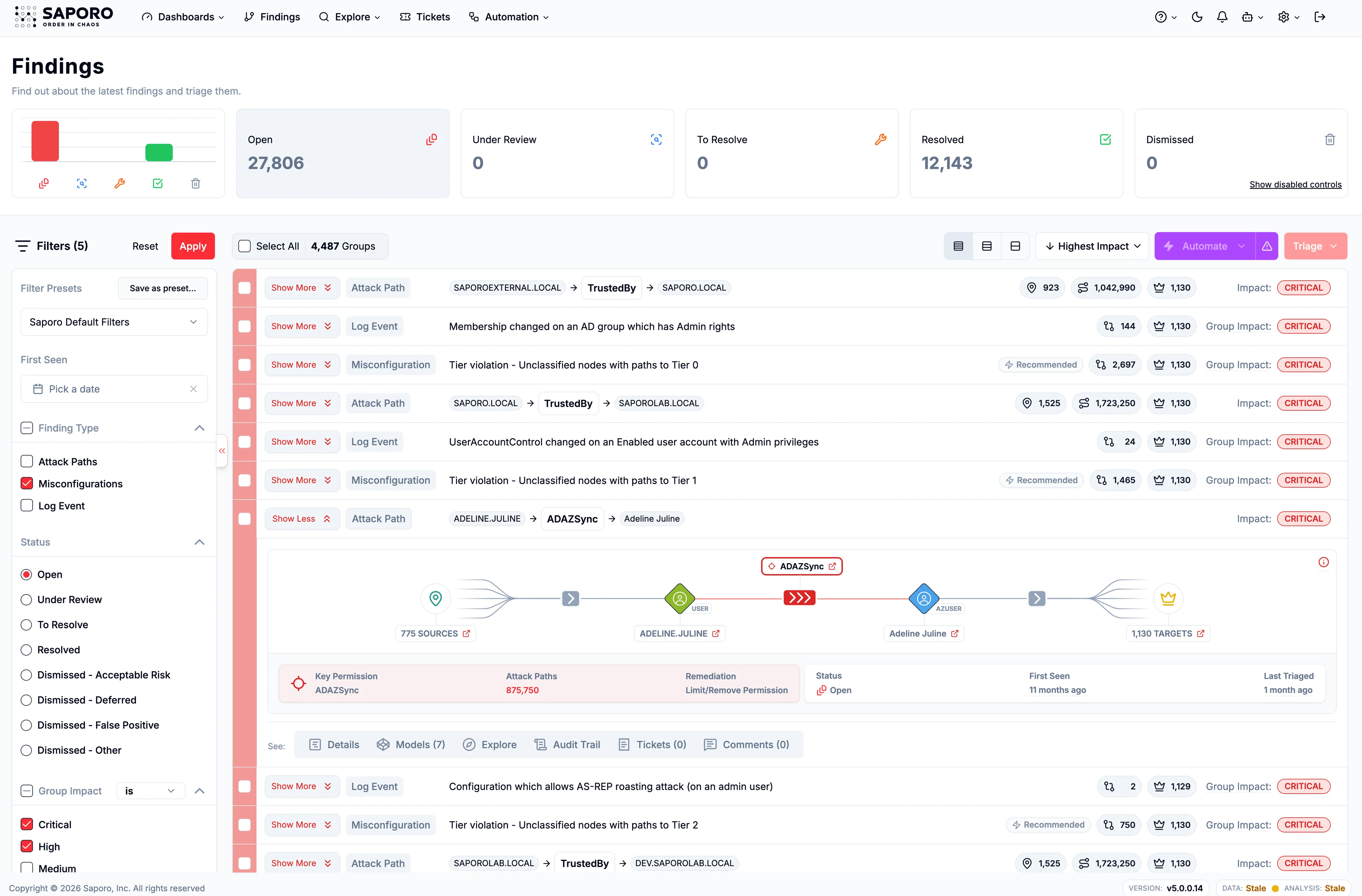
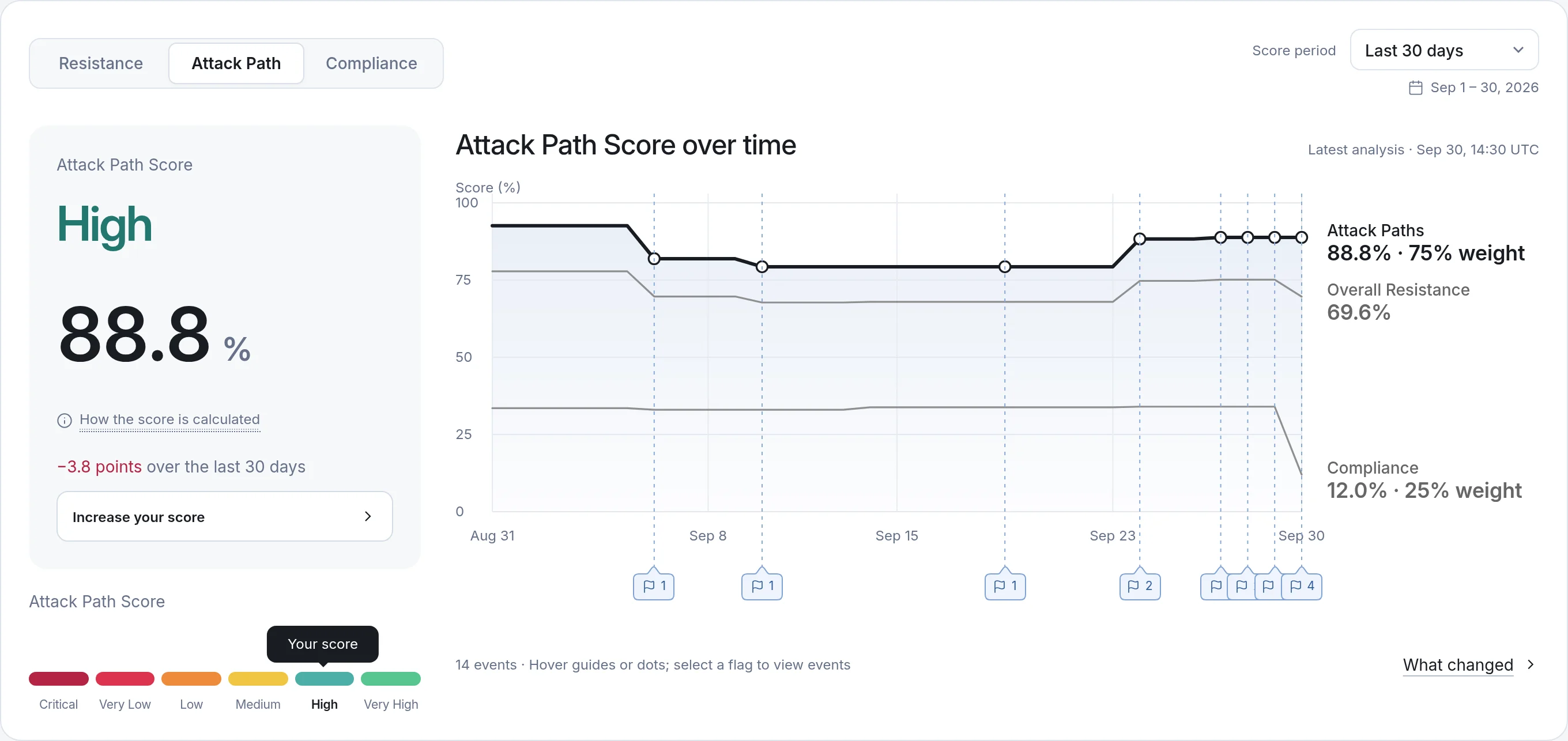
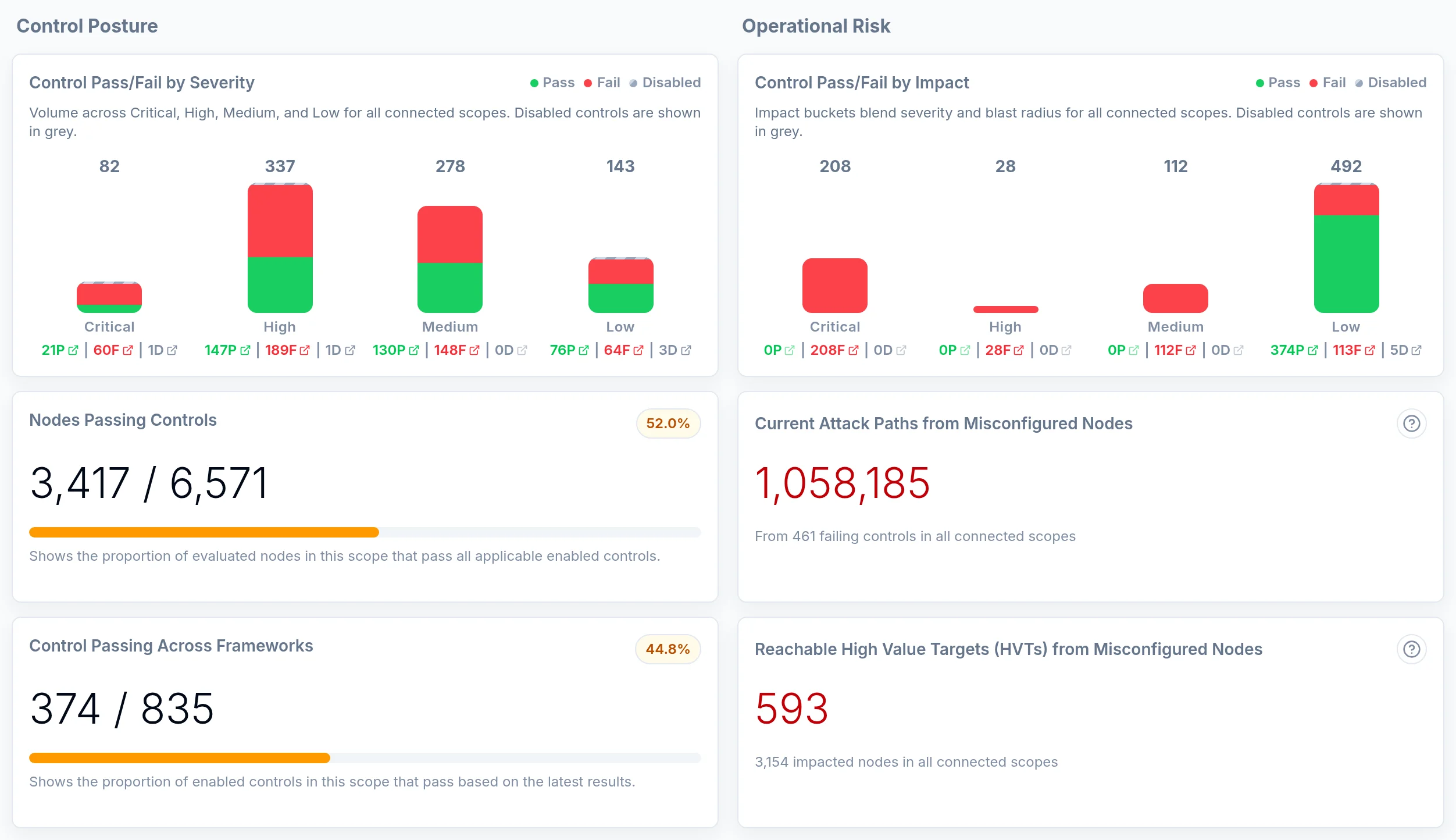
Saporo maps those attack opportunities across Active Directory, ADCS, SMB shares, and Windows local accounts, then prioritizes the changes that best protect your critical systems.

Microsoft Active Directory
  • Users
  • Groups
  • Computers
  • Group Policies
  • ACLs
  • Trusts

3.4 hours is the median time for attackers to attempt access to Active Directory after gaining initial access.

Source: Sophos Active Adversary Report 2026

ACTIVE DIRECTORY Q&A

What security teams ask about Active Directory exposure

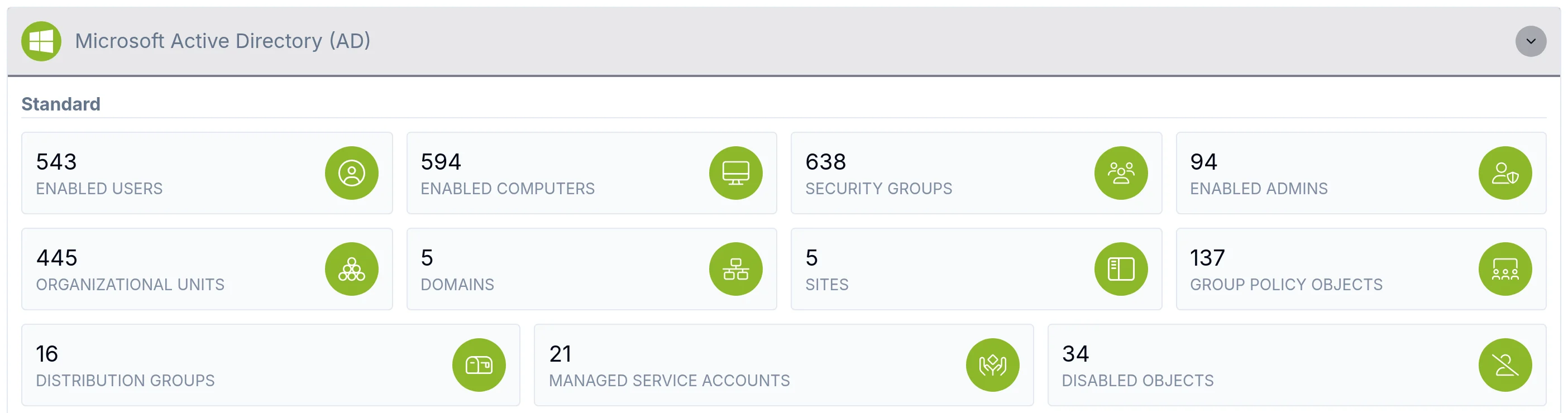
Saporo connects users, groups, computers, organizational units, Group Policies, trusts, ACLs, delegation, and privileged identities. With the corresponding collectors configured, Saporo also brings ADCS, SMB permissions, and Windows local users and groups into the same exposure model.

Saporo collects Active Directory data without agents, using a standard, non-privileged domain account, and changes nothing in the directory. It supports multi-domain and multi-forest environments, with one configuration per domain. It collects directory data through LDAP or LDAPS, and Group Policy content from SYSVOL over SMB.

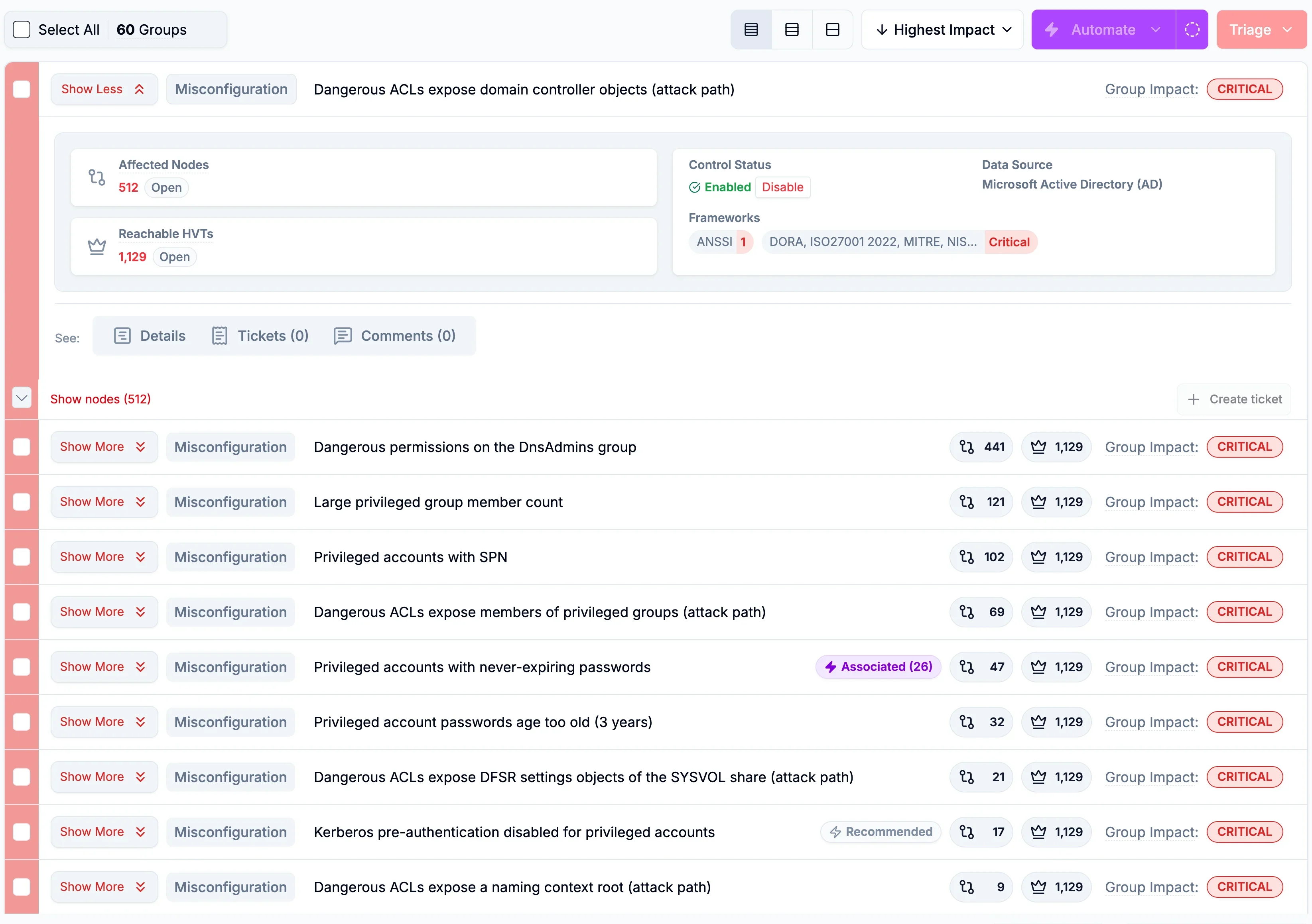
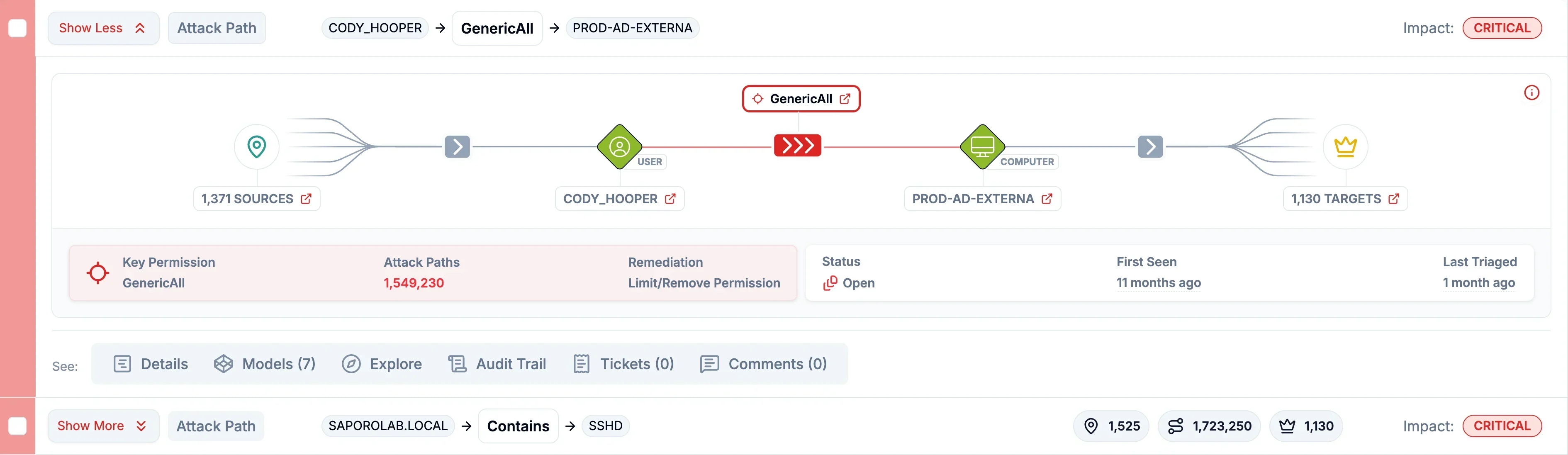
A misconfiguration describes one weakness. An attack path shows how identities, permissions, delegation, certificates, local privilege, and other relationships can combine into an attack path toward Tier 0 systems or another High Value Target.

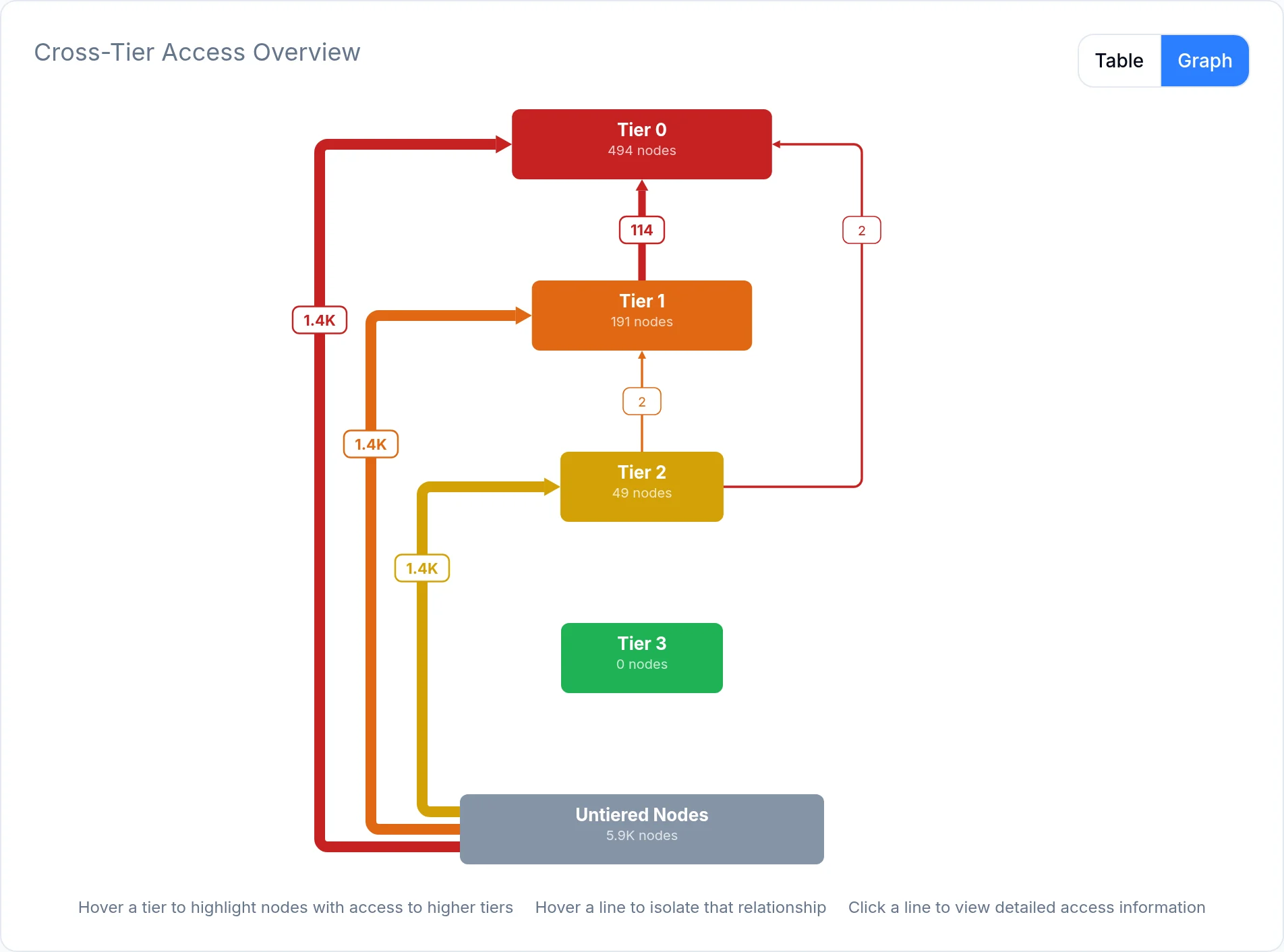
Yes. Saporo maps the relationships that can cross privilege boundaries or create reachability toward Tier 0, helping teams find tiering violations and prioritize the changes that strengthen protection around critical systems.

Yes. With the ADCS, SMB Shares, and Windows Local collectors configured, Saporo combines certificate infrastructure, share permissions, and Windows local accounts with Active Directory relationships in the same exposure model.

Saporo uses attack-path context to show which permission, delegation, certificate, or local-security change can break attack and access paths and reduce the most exposure, rather than treating every finding as equally urgent.

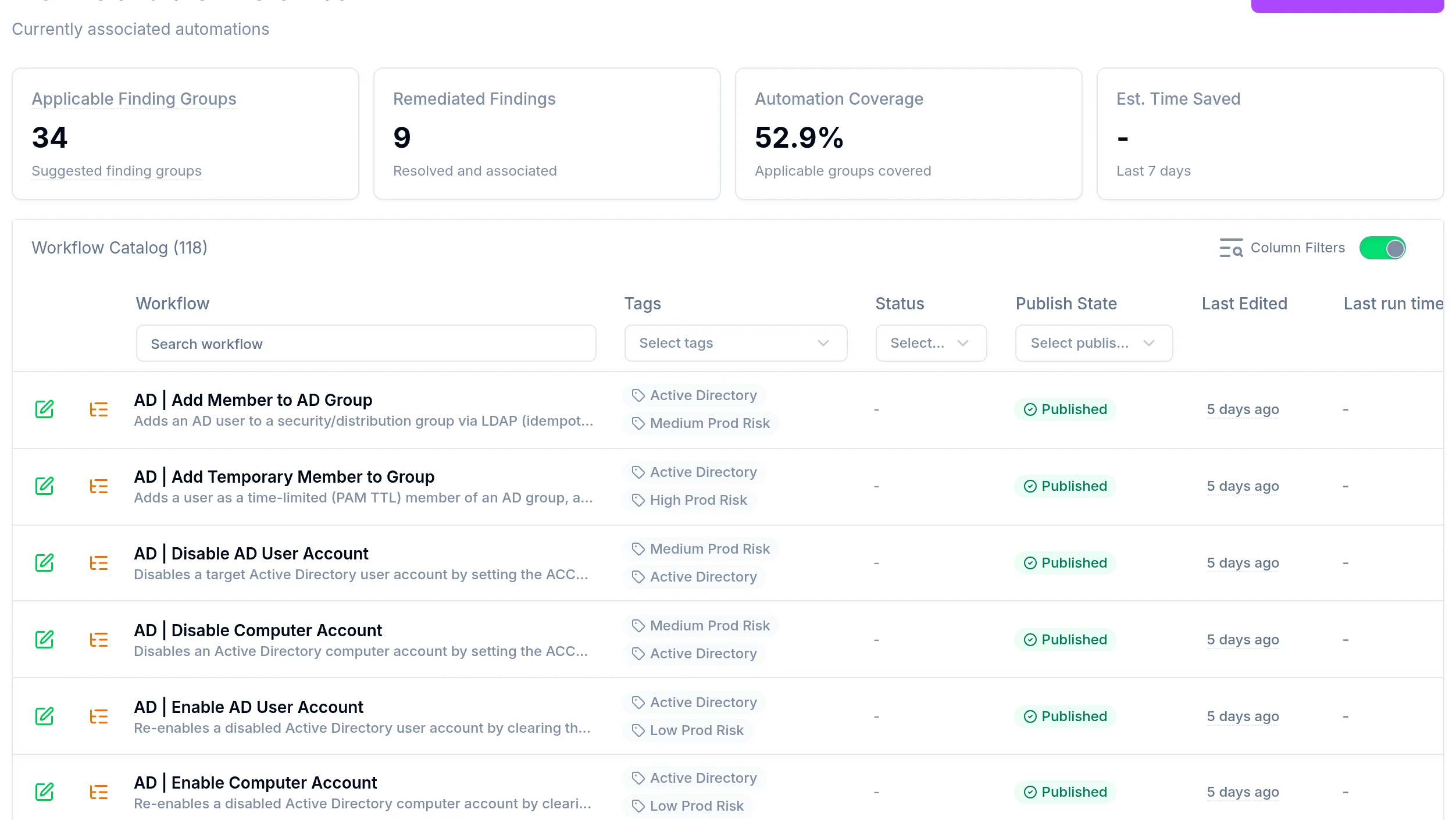
Saporo Enterprise includes workflows for supported changes such as disabling dormant accounts, updating group memberships, and correcting unsafe delegation settings. Workflows use configured credentials and can include approval steps before sensitive actions.
Reduce identity exposure before it becomes an attack

Book a demo